AI Ops with GitHub Copilot and OpenAI Codex: Intelligent DevOps, With Engineers in Control
Why this matters today: the highest-value use of AI in operations is not automatic production change. It is shortening the path from signal to a well-evidenced engineering decision.
DevOps work has always involved automation, but much of an engineer’s day is still spent translating intent into syntax: writing Terraform, correcting a workflow, assembling a Kubernetes manifest, searching logs, and documenting what happened after an incident. AI-assisted tools are changing that workflow. They can draft, explain, compare, and investigate at a speed that makes the human engineer more effective.
That does not make the engineer optional. It makes careful review, good observability, and strong delivery controls even more important.
What AI Ops actually means
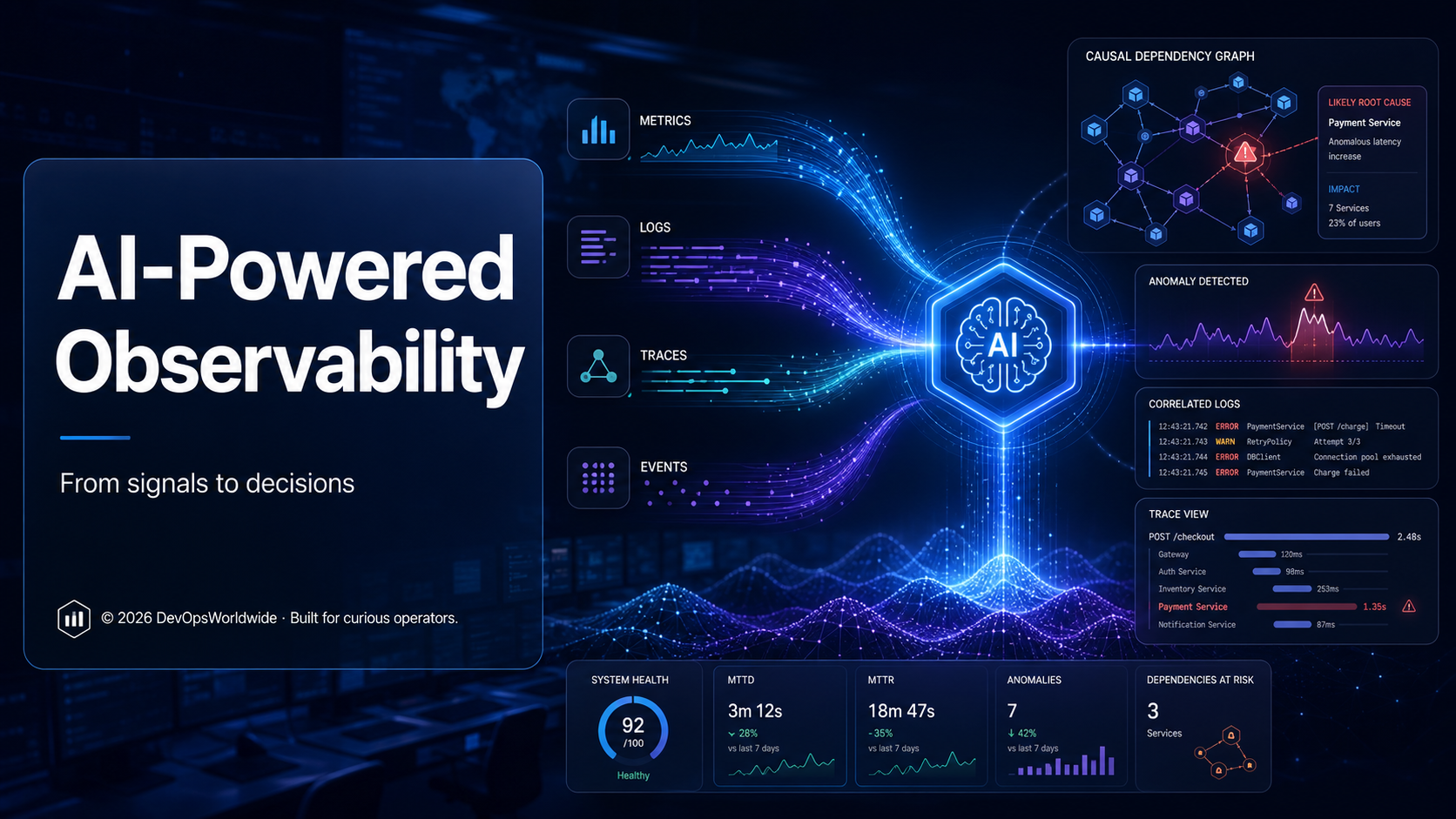
AI Ops is the application of machine learning and language models to operational data and engineering workflows. Traditional observability helps teams see what happened. A mature AI-assisted workflow can help a team investigate why it happened, identify the evidence worth checking, and propose the next safe action.
Useful inputs include:
- application logs, metrics, traces, and alerts;
- deployment and change history;
- infrastructure configuration and policy results;
- Kubernetes events and workload state;
- incident timelines, runbooks, and previous postmortems.
The goal is not to let a model make unexplained decisions. The goal is to reduce repetitive correlation work so that an operator can validate a better hypothesis sooner.
Copilot and Codex solve different problems
GitHub Copilot is particularly effective in the day-to-day authoring loop: explaining a file, suggesting a function, drafting a workflow step, or helping turn a plain-language requirement into a first version of a Dockerfile or Terraform module.
OpenAI Codex is suited to broader, repository-level engineering tasks: inspecting a codebase, following an implementation plan across files, proposing a cohesive patch, and running the project’s available checks. In practice, the tools complement one another.
| Capability | GitHub Copilot | OpenAI Codex |
|---|---|---|
| Primary working mode | In-editor assistance | Repository-level task execution |
| Best at | Fast iteration and code completion | Multi-file changes, investigation, and implementation plans |
| Typical DevOps use | YAML, shell, IaC, tests, and documentation drafts | Cross-cutting fixes, refactors, validation, and change summaries |
| Human responsibility | Review each suggestion | Define scope, review changes, and approve deployment |
Both should be treated as accelerators for engineering work—not as an authority on your architecture or production environment.
A realistic AI-assisted incident workflow
Imagine a deployment completes successfully, followed a few minutes later by elevated latency, errors, and Kubernetes pod restarts. The traditional investigation is familiar: open the dashboard, inspect logs, compare the deployment, examine events, identify the change, and decide whether to roll back.
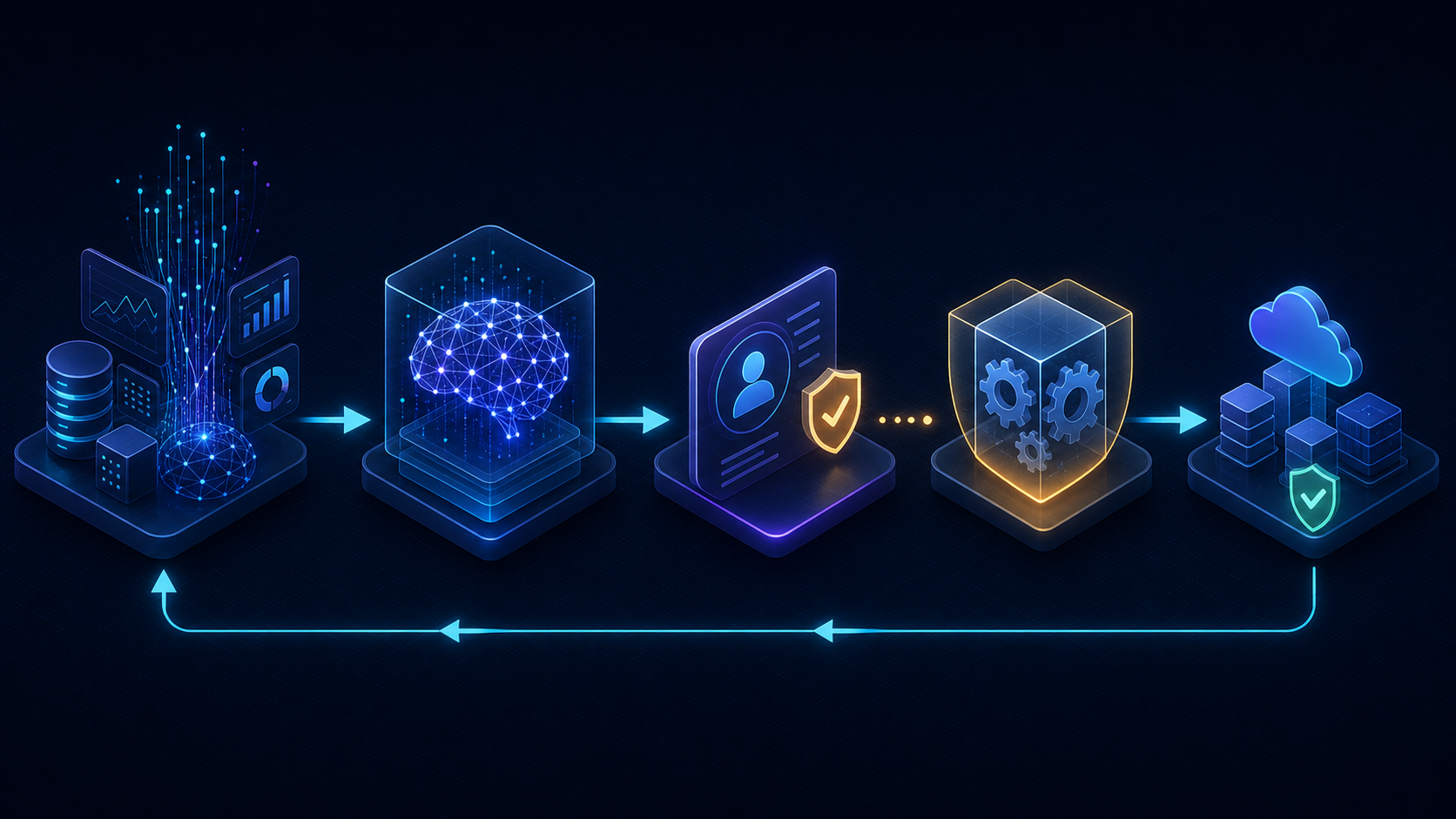
AI can make this flow tighter when it is given reliable, scoped inputs:
- An alert links the affected service, dashboard, recent deployment, and runbook.
- The assistant summarizes the change window and identifies correlated signals.
- It highlights evidence to verify—for example, a changed ConfigMap, failing readiness probe, or a sharp dependency-latency increase.
- It proposes reversible options, such as pausing rollout, rolling back, or scaling a dependency.
- The incident commander validates the evidence and authorizes the action.
- The tool drafts a timeline and post-incident notes from the verified events.
This is an important distinction: an AI assistant may speed up investigation, but it should not invent root causes or silently take an irreversible action.
High-value use cases for DevOps teams
Infrastructure as code
AI can generate a starting point for a requested design, such as a VPC with public and private subnets, an application load balancer, and autoscaling. The generated code is only the beginning. Engineers still need to validate naming, network boundaries, availability zones, tagging, cost, policy compliance, and disaster-recovery assumptions.
A productive prompt is specific about the desired outcome and the constraints:
Create a Terraform module for a highly available web service. Use three availability zones, private application subnets, least-privilege IAM, encrypted storage, and variables for environment-specific sizing. Do not create public database access.
The expected output is a reviewable draft, accompanied by terraform validate, plan, policy checks, and peer review—not a direct apply to production.
Kubernetes operations
Kubernetes is a strong candidate for AI assistance because the configuration is expressive but verbose. An assistant can draft a Deployment with resource requests, probes, a ConfigMap, and a Secret reference, then explain each field.
Before merging, validate the result with your established controls:
kubectl apply --dry-run=server -f deployment.yaml
kubectl diff -f deployment.yaml
kubectl auth can-i --list --as=system:serviceaccount:namespace:service-account
The model can accelerate manifest creation; it cannot know the correct resource limits, network policies, or rollout risk without your operational context.
CI/CD pipelines
Pipeline syntax is a frequent source of low-value friction. AI tools can draft a GitHub Actions workflow, a Jenkinsfile, a reusable CI component, or a release-note template. The engineering work is deciding the controls: what is tested, which artifacts are trusted, which environments require approval, and how rollback works.
Use AI to improve the quality of a pipeline review as well. Ask it to enumerate secret exposure paths, missing cache keys, unpinned action references, absent concurrency controls, or deployment steps that are not idempotent.
Shell automation and runbooks
AI can quickly produce a first draft for certificate-expiry checks, backup verification, log cleanup, or a diagnostic command sequence. Treat shell scripts as production code: use shellcheck, test in a disposable environment, avoid unquoted variables, and make destructive operations explicit.
For runbooks, a useful pattern is to have the tool draft the structure while an experienced operator supplies the real decision points:
- how to confirm impact;
- what evidence is needed before an action;
- safe rollback commands;
- escalation criteria;
- ownership and communications.
Documentation that stays current
Documentation is one of the clearest wins. Assistants can turn a merged change, deployment record, or incident timeline into a first draft of a README, architecture note, SOP, or postmortem. The team must still review it for factual accuracy, sensitive information, and clarity. A fast inaccurate document is still harmful.
Guardrails that make AI useful instead of risky
The same habits that make DevOps reliable also make AI-assisted work reliable.
- Provide bounded context. State the service, language, desired change, constraints, and acceptance criteria. Avoid dumping unrelated repositories or production data into a prompt.
- Keep secrets out of prompts. Never paste credentials, tokens, private keys, customer data, or proprietary production logs into a tool that is not approved for that data.
- Require evidence. Ask the tool to cite the file, metric, log line, or change that supports a recommendation. A confident narrative is not proof.
- Use normal delivery controls. Version control, pull requests, automated tests, policy-as-code, security scans, and progressive delivery remain essential.
- Prefer reversible actions. Build rollback, feature flags, and approval gates into workflows. AI should make a change easier to understand, not easier to make recklessly.
- Measure outcomes. Track investigation time, change-failure rate, review quality, and documentation freshness. Tool adoption should improve an operational metric, not only feel faster.
What AI cannot replace
AI does not possess your organization’s risk appetite, business priorities, customer commitments, or complete production context. It cannot reliably decide whether a small latency increase warrants a rollback, whether a migration is safe in a specific region, or whether a configuration violates an unwritten but important constraint.
The engineer remains accountable for the outcome. Every AI-generated infrastructure change should be reviewed, tested, scanned, validated, and version-controlled before it reaches production.
The path forward: agentic, but accountable
The next stage of DevOps AI is not simply better autocomplete. It is assistants that can help plan a task, inspect a repository, prepare a change, run validations, and assemble a clear handoff for a human reviewer. That is valuable when the system is designed around auditability and control.
The best operating model is straightforward:
AI prepares and explains. Engineers decide and approve. Automation executes only within clearly defined guardrails.
Teams that adopt this model can spend less time on boilerplate and disconnected dashboards, while preserving the judgment and ownership that dependable systems require.